
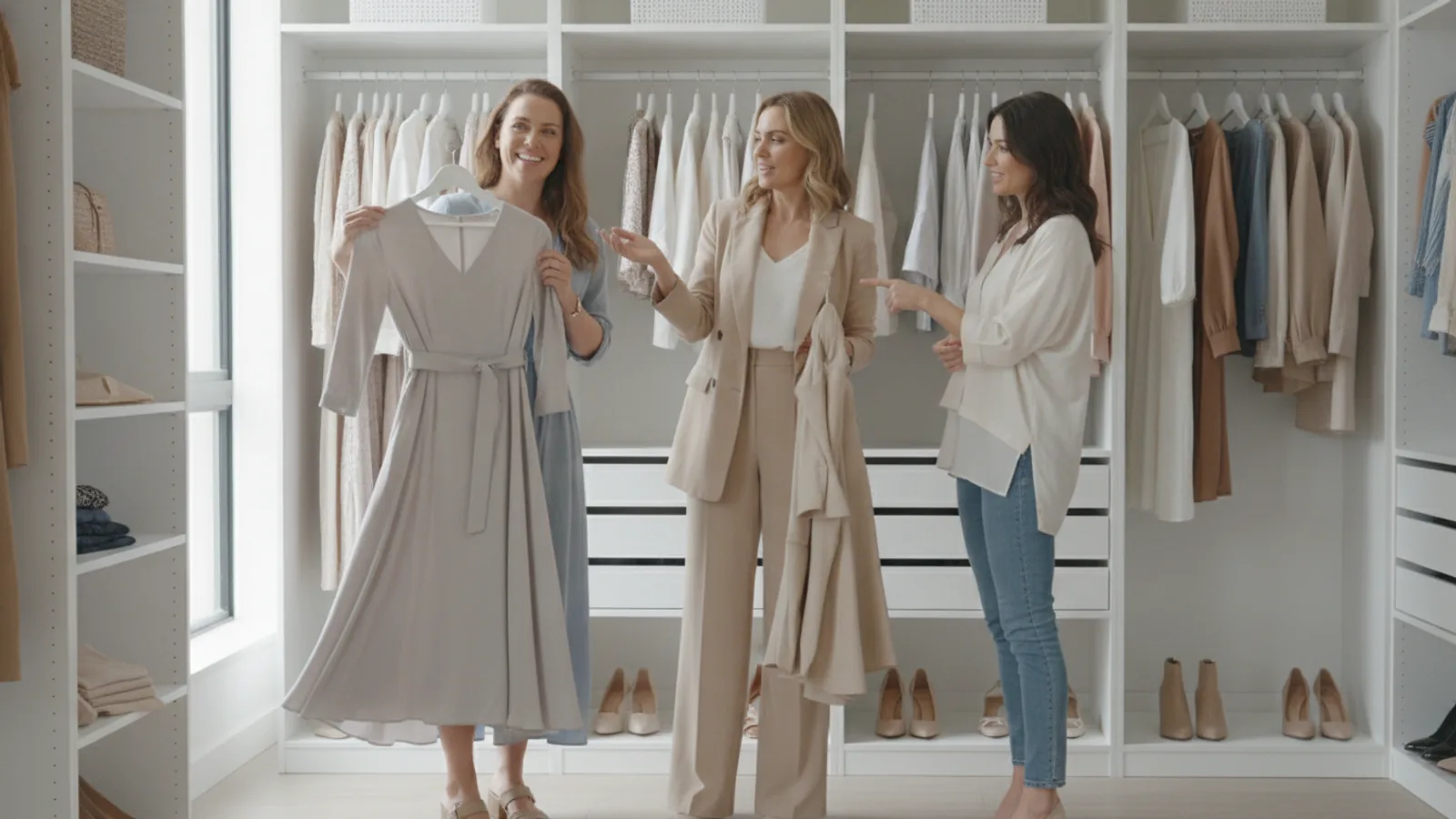
How To Dress For Your Body Type
Learning how to dress for your body type is less about following strict rules and more about understanding proportions to create silhouettes you love. This guide helps you identify your natural shape and choose clothes that fit well, feel comfortable, and boost your confidence. By focusing on balance and highlighting your favourite features, you can make smarter shopping decisions and build a wardrobe that truly works for you, saving you time, money, and stress in the fitting room.
Fast Answer
- Key Action: Identify your main body shape (e.g., apple, pear, hourglass).
- The Goal: Use clothing to create balance and proportion.
- Core Principle: Draw attention to the features you want to highlight.
- Main Tool: A simple fabric measuring tape.
Before You Start
- A full-length mirror: You'll need to see your entire silhouette clearly.
- A fabric measuring tape: Essential for taking accurate bust, waist, and hip measurements.
- Form-fitting clothes: Wear leggings and a camisole or similar close-fitting items for measuring.
- An open mind: Forget prescriptive fashion magazine "rules" from the past. This is about empowerment, not restriction.
- Note-taking tools: A pen and paper or a notes app on your phone to jot down your measurements.
Step-by-Step Instructions
Step 1: Take Your Measurements and Identify Your Shape
The first step is to understand your proportions. Stand in front of your mirror in form-fitting clothing and use a fabric measuring tape held parallel to the floor.
- Shoulders: Measure from the tip of one shoulder all the way around to the other. It can be easier to have someone help with this.
- Bust: Measure around the fullest part of your chest.
- Waist: Measure around the narrowest part of your torso, usually just above your belly button.
- Hips: Measure around the widest part of your hips and bottom.
Now, compare these numbers. While bodies are wonderfully diverse, most fall into one of five general categories based on these proportions:
- Apple (or Round): Your bust and/or midsection are wider than your hips, with less waist definition. You likely have slimmer legs.
- Pear (or Triangle): Your hips are the widest part of your body. Your shoulders and bust are narrower, and you have a well-defined waist.
- Hourglass: Your bust and hips are roughly the same measurement, with a significantly narrower, well-defined waist.
- Rectangle (or Straight): Your shoulders, bust, and hips are all around the same measurement, with little waist definition.
- Inverted Triangle: Your shoulders or bust are the widest part of your body, tapering down to narrower hips.
Step 2: Understand the Principle of Balance
Dressing for your body type is all about creating visual balance. Think of it like a set of scales. The goal is to use clothing lines, colours, and textures to create a harmonious and proportionate silhouette. This usually means adding volume or interest to your narrower half to balance out your wider half.
For example, if you have broader shoulders (Inverted Triangle), you might wear A-line skirts or wide-leg trousers to add volume to your lower body, balancing your top half. Conversely, if you have wider hips (Pear), you might wear a top with interesting details or a brighter colour to draw the eye upward and broaden your shoulders visually.
The waist often acts as the focal point. Creating or emphasising a waistline can add shape and structure to almost any outfit. This is the secret weapon for many body types, especially Rectangle and Apple shapes.
Step 3: Choose Silhouettes for an Apple Shape
If you carry more weight around your middle, the goal is to create a more defined waist and highlight your often-slender legs and arms. You want fabrics that drape and flow rather than cling to the midsection.
- Tops: Look for tops that flow away from the body. Empire waistlines, A-line tunics, and wrap tops that tie at the side are excellent. V-necks or scoop necks are fantastic for elongating your torso.
- Dresses: A-line dresses, empire-waist styles, and wrap dresses are your best friends. A shift dress that skims over the midsection can also be very flattering.
- Trousers & Skirts: Opt for flat-fronted, straight-leg, or bootcut trousers to create a clean line. Avoid fussy details like pleats or large pockets around the waist. Show off your legs with knee-length skirts.
- Jackets: Single-breasted jackets that are structured and finish at the hip will create a lovely long line. Avoid cropped or double-breasted styles.
Step 4: Choose Silhouettes for a Pear Shape
With wider hips and a narrower top half, your aim is to add volume and interest to your bust and shoulders while keeping your lower half clean and simple. This balances your proportions and highlights your defined waist.
- Tops: This is where you can have fun! Go for bright colours, bold prints, and interesting details like ruffles, statement sleeves, or embellishments around the neckline. Boat necks and wider collars can visually broaden your shoulders.
- Dresses: Fit-and-flare dresses and A-line styles are perfect as they skim over the hips while highlighting the waist. Look for dresses with a lighter or more detailed top half and a darker, plain bottom.
- Trousers & Skirts: Choose darker colours for your bottom half. Well-fitting bootcut or straight-leg trousers create a beautiful line. A-line skirts are universally flattering as they glide over the hips.
- Jackets: Look for structured jackets and blazers that end at your waist or mid-hip. Details like defined shoulders can help balance your frame.
Step 5: Choose Silhouettes for an Hourglass Shape
Your bust and hips are balanced, and you have a defined waist. The key here is to follow your natural curves rather than hide them. Your main goal is to accentuate your waist without adding extra bulk to your top or bottom.
- Tops: Fitted tops are made for you. Look for wrap tops, scoop necks, and V-necks that follow your curves. Tucking your top into your trousers or skirt will always look polished.
- Dresses: Wrap dresses, bodycon styles, and belted shirt dresses will all look fantastic. Anything that cinches in at the waist is a winner.
- Trousers & Skirts: High-waisted styles are your secret weapon. Pencil skirts beautifully highlight your curves, while wide-leg or bootcut trousers balance your hips.
- Jackets: Belted coats and trenches are ideal. Look for jackets that are shaped and nip in at the waist to avoid a boxy look.
Step 6: Choose Silhouettes for a Rectangle Shape
Your silhouette is balanced but straighter, so the goal is to create the illusion of a more defined waist. You can do this by adding volume to your bust and hips and using belts to cinch your middle.
- Tops: Look for tops with details that add volume, such as ruffles, peplums, or breast pockets. Scoop necks and sweetheart necklines can create the illusion of curves. Layering is also a great technique.
- Dresses: A-line, empire, and belted dresses will help create a waistline. Colour-blocking styles with a darker panel at the waist can be very effective.
- Trousers & Skirts: You can wear almost any style! Flared or wide-leg trousers can add volume to your bottom half. Skirts with pleats, ruffles, or A-line shapes will create more definition.
- Jackets: A belted trench or a well-structured blazer that nips in at the waist is perfect. Peplum jackets are also a fantastic choice for creating curves.
Step 7: Choose Silhouettes for an Inverted Triangle Shape
With broader shoulders and a narrower lower body, the aim is to draw attention downwards and add volume to your hips and legs. This creates a more balanced, hourglass-like silhouette.
- Tops: Keep it simple on top. Opt for V-necks or scoop necks in darker, solid colours. Asymmetrical necklines can also be great for breaking up the shoulder line. Avoid shoulder pads, fussy necklines, and spaghetti straps.
- Dresses: A-line or fit-and-flare dresses are ideal as they add volume to your lower half. Look for styles that are simple on top with a fuller skirt.
- Trousers & Skirts: This is where you can experiment! Brightly coloured or printed trousers and skirts are perfect. Wide-leg trousers, culottes, A-line skirts, and pleated skirts will all help to balance your proportions.
- Jackets: Look for simple, unstructured jackets. Avoid styles with heavy shoulder detailing. A peplum hem on a jacket can be a great way to add hip volume.
Step 8: Master Fabric, Colour, and Print
Beyond the cut of your clothes, the materials and patterns you choose play a huge role in how they look and feel. These elements can be used strategically to enhance your shape.
- Colour: Dark colours (black, navy, charcoal) tend to recede and have a slimming effect. Bright colours and lighter shades tend to advance and draw the eye. Use this to your advantage. If you're a Pear shape, a dark pair of trousers with a bright top is a classic balancing act.
- Print: Like bright colours, prints draw attention. Use them on the areas you want to highlight. Be mindful of scale—a tiny print can get lost on a larger frame, while a huge print might overwhelm a petite one. Vertical stripes create a lengthening effect, while horizontal stripes can create width.
- Fabric & Texture: The weight and drape of a fabric are crucial. Stiff fabrics like heavy denim or tweed create structure, while drapey fabrics like jersey or silk skim the body. Textured fabrics like chunky knits, velvet, or sequins add volume, so place them where you want to add fullness.
Quick Reference
| Body Type | Goal | Use This | Why |
|---|---|---|---|
| Apple | Elongate torso, define waist | V-necks, A-line dresses, straight-leg trousers | Draws the eye vertically and skims over the midsection. |
| Pear | Balance hips, highlight top | Statement tops, fit-and-flare dresses, A-line skirts | Draws attention upward and glides over wider hips. |
| Hourglass | Follow curves, define waist | Wrap dresses, high-waisted trousers, belted jackets | Accentuates your natural waistline and balanced proportions. |
| Rectangle | Create curves, define waist | Peplum tops, belted dresses, layered jackets | Adds volume to bust/hips and cinches the middle. |
| Inverted Triangle | Balance shoulders, add hip volume | Wide-leg trousers, A-line skirts, simple V-neck tops | Draws the eye down and adds fullness to your lower body. |
Common Problems and Fixes
| I don't fit perfectly into one category. | Almost nobody does! Many people are a combination of two types. Don't worry about the label. Instead, focus on the principles. Are your shoulders wider than your hips? Then use the Inverted Triangle tips. Do you have a small waist but also a full bust? Combine advice from the Hourglass and Apple guides. Pick and choose what works for your unique frame. |
|---|---|
| Finding trousers that fit my waist and hips is impossible. | This is a very common issue, especially for Pear and Hourglass shapes. The solution is often to buy trousers that fit your widest part (your hips or thighs) and then have the waistband taken in by a tailor. The small cost of tailoring can make a £30 pair of trousers look like they were custom-made. |
| I feel like these "rules" are too restrictive. | Think of them as tools, not rules. If you love a trend that supposedly "doesn't work" for your body type, wear it anyway! The most important factor is your confidence. You can often make a trend work by applying the principle of balance. For example, if you're a Pear shape and love printed trousers, just pair them with a well-structured top to keep your silhouette balanced. |
| My body shape changes with weight fluctuations. | This is completely normal. Your underlying bone structure will stay the same, but your proportions might shift. Re-measure yourself every so often and adjust your focus. Clothes with stretch, wrap styles, and adjustable waists are fantastic for accommodating natural body changes. |
Advanced Tips
- Learn the "Rule of Thirds": In visual arts, dividing a frame into thirds creates a more dynamic and pleasing composition. In fashion, this means avoiding outfits that cut you exactly in half (e.g., a top and trousers of equal visual length). An outfit that is one-third top and two-thirds bottom (like a slightly cropped jumper over high-waisted trousers) or vice versa is often more flattering and elongating.
- Invest in Good Underwear: The right foundation can completely change how your clothes fit. A well-fitted bra provides support and lift, while seamless pants or shapewear can create a smooth canvas under fitted garments. It’s the invisible step that makes the biggest visible difference.
- Understand Fabric Drape: Pay attention to how different materials fall. A stiff cotton creates a sharp, architectural shape. A soft viscose or silk drapes and clings to curves. A structured ponte knit smooths and holds its shape. Understanding this will help you choose garments that will create the silhouette you want.
- Create a Wardrobe "Formula": Once you identify 2-3 silhouettes that you feel amazing in (e.g., a V-neck top + A-line skirt + ankle boots), make that your go-to formula. You can then buy variations of these pieces in different colours and fabrics, which makes getting dressed in the morning incredibly fast and removes decision fatigue.
How To Dress For Your Body Type FAQ
Do these guidelines apply to plus-size bodies?
Absolutely. Body shape is about proportion, not size. A size 8 and a size 22 can both be a Pear, Apple, or Hourglass shape. The principles of balancing proportions, highlighting your best features, and ensuring a good fit apply to every single body at any size.
How often should I re-measure myself?
It's a good idea to check your measurements once a year, or after any significant life changes like pregnancy or a change in your fitness routine. Our bodies are not static, and a quick check-in can help you understand why some clothes might not be fitting as well as they used to.
Should I throw out all the clothes that don't fit my "type"?
No, not necessarily. Before getting rid of anything, try re-styling it using these principles. Can that boxy top be improved by tucking it into a high-waisted skirt? Can that shapeless dress be transformed with a belt? Often, a simple styling trick is all that's needed. If you still don't feel great in it, then it's time to donate it and make room for something you love.
Is it expensive to dress for your body type?
It can actually save you money in the long run. When you know what shapes and styles work for you, you stop making impulse purchases that end up unworn at the back of the wardrobe. You can shop more intentionally, whether you're at a high-end department store or a charity shop, because you know exactly what you're looking for. A small budget for tailoring can also make less expensive clothes look much more high-end.
Final Checklist for Dressing For Your Body Type
- Measurements Taken: You have accurate measurements for your shoulders, bust, waist, and hips.
- Shape Identified: You have a general idea of your primary body shape (e.g., Pear, Rectangle, etc.).
- Principle Understood: You know the goal is to create visual balance, not to follow rigid rules.
- Key Silhouettes Chosen: You have identified a few go-to cuts for dresses, tops, and trousers that you feel good in.
- Fit is Prioritised: You are committed to buying clothes that fit the largest part of you and are open to minor tailoring for a perfect fit.
- Confidence is Key: You remember that the best outfit is one that makes you feel comfortable and confident.


